
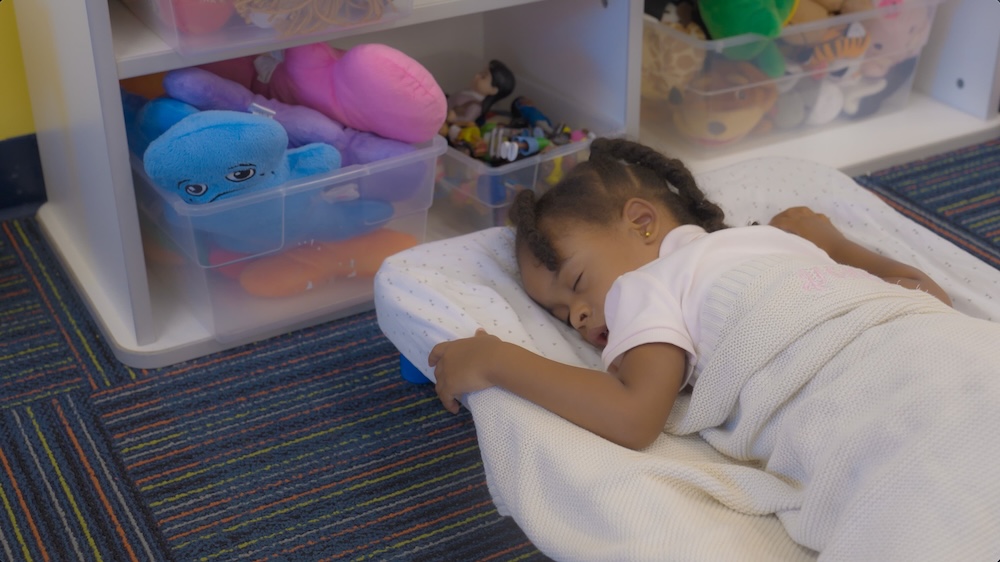
When families ask, “How long should my child nap?” our answer often starts in a slightly different place. Instead of focusing on minutes or hours, we focus on something more important: a consistent, structured quiet time routine.
At The Learning Experience, we know that some children nap and some children don’t. What matters most is that every child participates in a predictable, calming, quiet time that supports rest, and independence.
Let’s explore why quiet time matters and how it supports children of all ages.
It’s About Routine, not just Sleep
Rest time in the early afternoon is a valuable part of a young child’s daily rhythm. During this time, some children fall asleep naturally, while others rest quietly and engage in calm, independent activities. Both responses are developmentally appropriate.
What matters most is the consistency of the routine itself. When children know what to expect each day, their bodies and brains begin to anticipate and respond to that structure. A predictable quiet time supports self-regulation, emotional balance, and a smoother transition into afternoon learning.
Quiet Time at TLE
Across our classrooms, quiet time is a meaningful part of the day. It is not simply “nap time.”
It’s an opportunity to:
- Slow down after a busy morning
- Practice self-regulation
- Develop independence
- Respect others’ need for rest
- Reset emotionally and physically
At TLE, all children ages - toddler and up - will rest or nap daily. The room becomes calm, and teachers provide gentle support to help children transition into rest mode. Some children fall asleep quickly, while others lie quietly and look at books, or they can play with soft, quiet toys on their cots/nap mats like plushes, books, soft blocks or sensory tubes.
Every child benefits – no matter if they fall asleep or not.
Quiet Time Benefits All Ages
The benefits of structured rest extend across all age groups.
- Infants & Toddlers: predictable rest periods support brain development and emotional security
- Preschoolers: Even children who begin to phase out naps still benefit from a scheduled quiet rest. It improves focus, reduces overstimulation, and supports afternoon engagement.
- Pre-K and Older Learners: Quiet time strengthens impendence, patience, and respect for shared classroom routines.
Rest doesn’t always mean sleep – it can also mean balance.
What if my Child Does Not Nap?
It’s completely normal for some children to resist naps, especially during developmental leaps or growth spurts. That doesn't mean quiet time isn't necessary... Even if a child does not sleep, lying quietly, listening to soft music or reading independently:
- Lowers stress levels
- Supports emotional regulation
- Helps the brain process new things
- Builds independence
Sometimes children who appear to have “outgrown” naps simply need time and space to learn how to calm their bodies down.
How to Support Quiet Time at Home
Families can mirror this structured approach at home by:
- Keeping consistent rest windows
- Creating a calm sleep space with dim lighting
- Offering quiet books or calming activities
- Avoiding screens before rest time
- Explaining the quiet time routine to the children
- Engaging in self-regulation exercises (i.e., Breathing, stretching) to help transition to quiet time
The goal here is not forcing sleep, but to build a routine that teaches children how to rest, reset, and understand the connection between their bodies and feelings. Sleep needs vary from child to child, and that’s perfectly normal. What doesn’t vary is the importance of routine, consistency, and opportunities to practice calming the body and mind.
At The Learning Experience, we view quiet time as an essential part of the whole child experience. Whether children nap or simply rest, they’re building independence and self-awareness skills which last a lifetime!
If you have questions about your child’s rest routine, our TLE teachers are always here to partner with you. Together, we can create consistent habits that help your child grow, thrive, and feel confident each day.
Back to Blog



Sign up for our newsletter!
Stay connected with our early education resources