Ages 0-5 | Literacy & Language Development | Featured Character: Phoebe Phonics
Reading readiness is one of the most discussed topics in early childhood, and also one of the most misunderstood. Many parents focus on letter recognition or early sight words as the milestones to track. These matter, but they are not what research identifies as the strongest predictors of reading success. The skills that actually carry the most weight are largely invisible, built through thousands of small interactions long before a child ever picks up a book independently.
What Phonological Awareness Is and Why It Matters More Than the Alphabet
Phonological awareness is the ability to hear and work with the sound structure of spoken language, independent of print. It includes recognizing that "cat" and "hat" rhyme, that "sunshine" is made of two words, that "dog" begins with a /d/ sound, and that "elephant" has three syllables. These are auditory skills, not visual ones, and they are the single strongest predictor of later reading success identified in decades of research.
Children who enter kindergarten with strong phonological awareness learn to read significantly faster and with fewer struggles than children who do not, regardless of other preparation. And the great news is that phonological awareness develops naturally through exactly the kinds of experiences children enjoy most: songs, rhymes, wordplay, read-alouds, and conversation.
This is why a nursery rhyme sung at bedtime is not just sweet. It is phonological awareness instruction. The rhyming patterns, rhythmic structure, and repeated sound combinations are precisely what the developing brain needs to build the auditory processing system that reading depends on.
The Role of Conversation in Building Language Architecture
Vocabulary is the other pillar of reading comprehension, and it is built almost entirely through conversation and shared reading in the early years. The quality of those conversations matters enormously. Open-ended exchanges that require children to narrate, explain, predict, and reason build the deep vocabulary and inferential language skills that reading comprehension depends on far more effectively than simple question-and-answer interactions.
When you ask your four-year-old "What do you think will happen next in this story?" during a read-aloud, you are not just being playful. You are building the predictive reasoning and comprehension monitoring that fluent readers rely on every time they encounter a text.
Practical Literacy Habits for Every Day
Reading aloud is the single highest-leverage literacy activity available to parents. Aim for 15 to 20 minutes of shared reading daily and make it interactive. Point to words as you read. Ask questions about pictures. Wonder out loud about what characters are feeling. Revisit books your child loves repeatedly. Repetition is not a sign of limited curiosity. It is how young brains consolidate language patterns.
Beyond read-alouds: sing rhyming songs. Play sound games in the car. Introduce books with strong phonological patterns. Talk constantly about everything and invite your child into the conversation as a full participant, not just a listener.
How This Comes to Life at The Learning Experience:
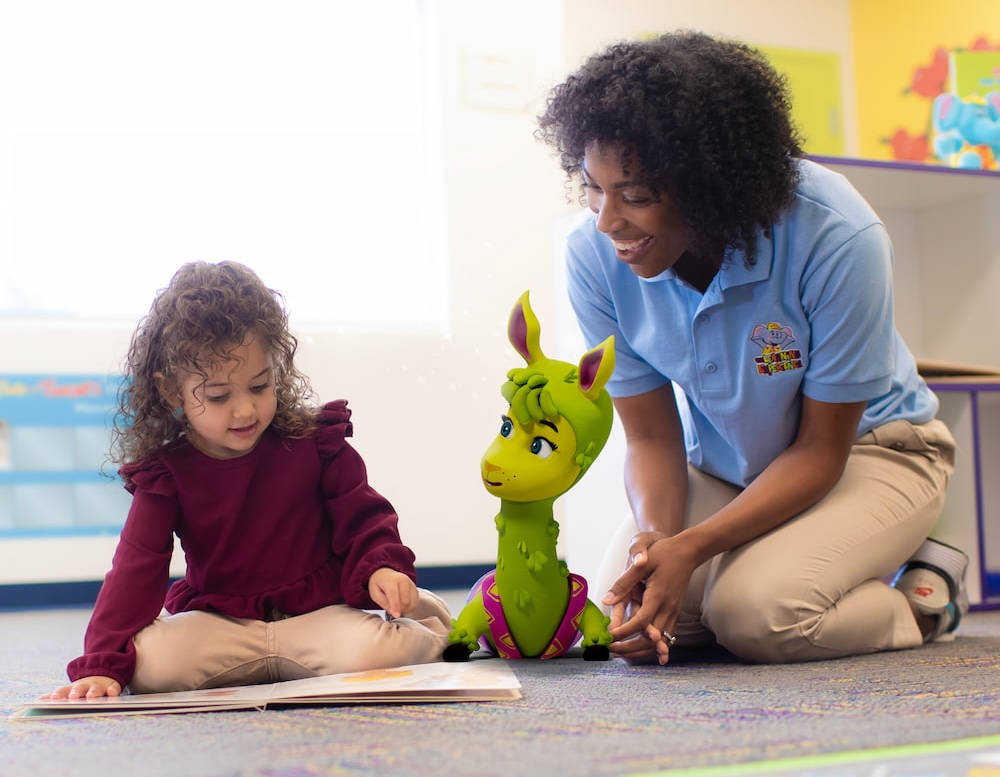
At The Learning Experience, Phoebe Phonics helps bring early literacy to life through the L.E.A.P.® curriculum's integrated approach to language and literacy development. TLE classrooms incorporate phonological awareness activities, interactive read-alouds, vocabulary-building conversations, and phonics instruction in developmentally appropriate formats that make language learning feel joyful. Research cited in Brunick et al. (2016) shows that active adult co-engagement during character-based learning, including asking questions, making connections, and discussing content together, significantly predicts preschoolers' comprehension and expressive vocabulary (Strouse, O'Doherty & Troseth, 2013). TLE's Phonics with Phoebe program is designed with this in mind, creating shared language experiences that parents can extend at home through the same characters and content their child encounters in the classroom every day. Children build the reading foundations they need for kindergarten through daily, purposeful language experiences.
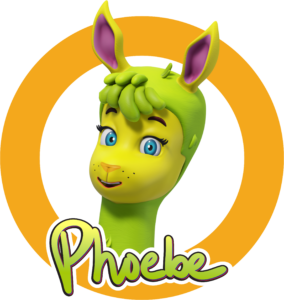
Meet Phoebe Phonics
"Reading, writing, spelling too, we'll learn together, me and you!": Phoebe Phonics is TLE's champion of language, story, and the joy of words. Enthusiastic and expressive, Phoebe lives for a great read-aloud and a perfectly chosen rhyme. Phoebe knows that the best readers in first grade were the best listeners in preschool.
Frequently Asked Questions
What literacy skills should preschoolers learn before kindergarten?
The most important pre-reading skills include phonological awareness (recognizing sounds, rhymes, and syllables), vocabulary development, listening comprehension, print awareness, and early letter-sound connections. These develop through rich oral language experiences, daily read-alouds, and playful engagement with language.
How do I help my preschooler get ready to read?
Read together every day and make it interactive. Sing songs with rhyme and rhythm. Play sound games. Have rich conversations that require your child to explain, predict, and reason. Focus less on drilling letter names and more on building genuine language richness.
Want to see our curriculum in action?
Schedule a tour at your nearest The Learning Experience center and watch learning come to life through the characters, activities, and meaningful moments that make TLE different.