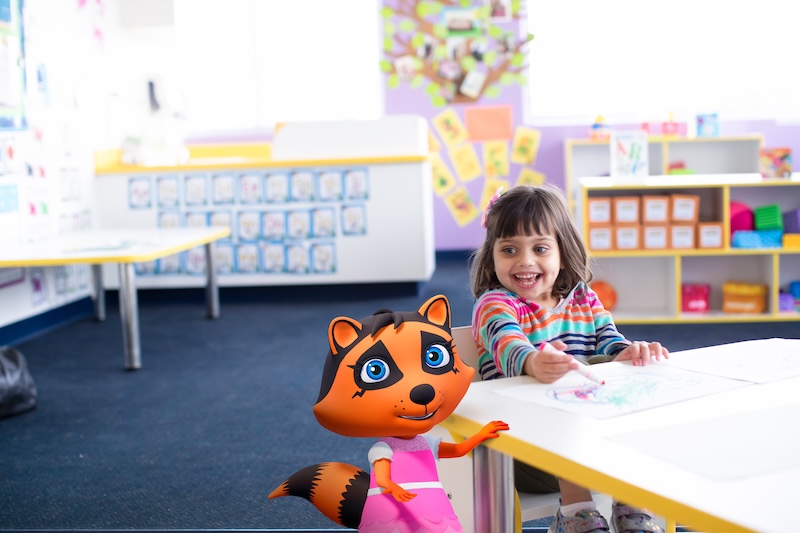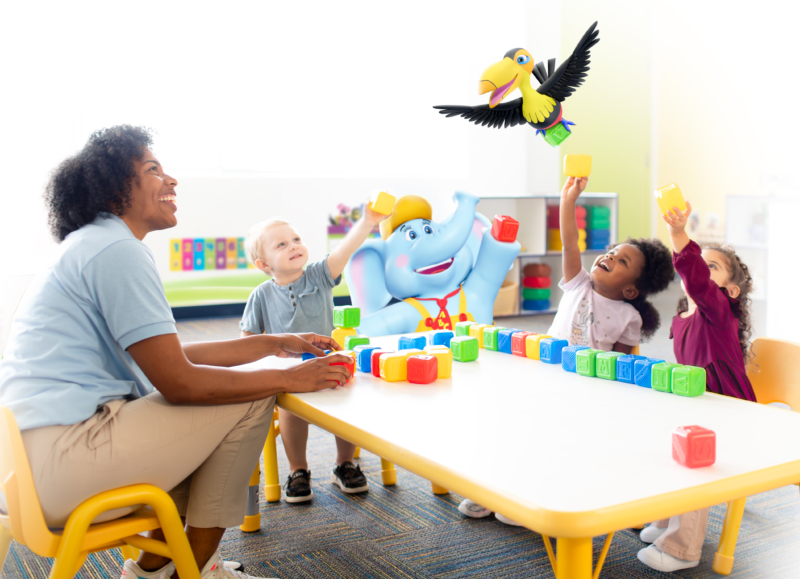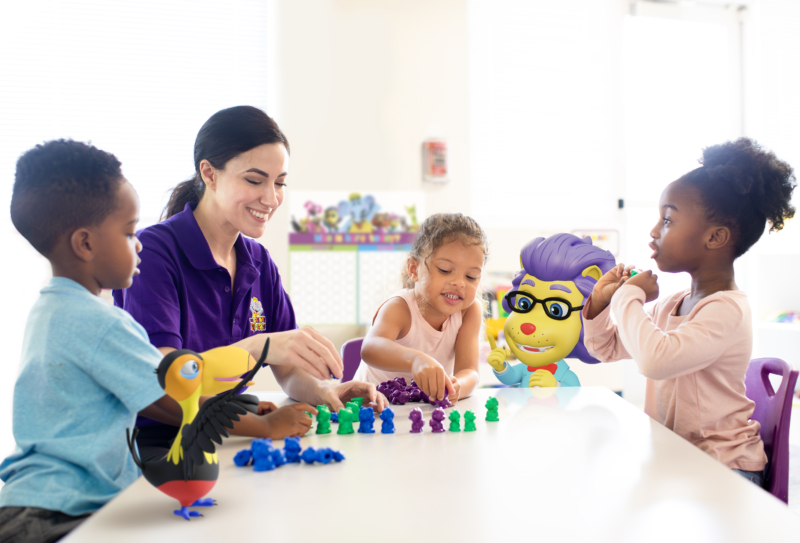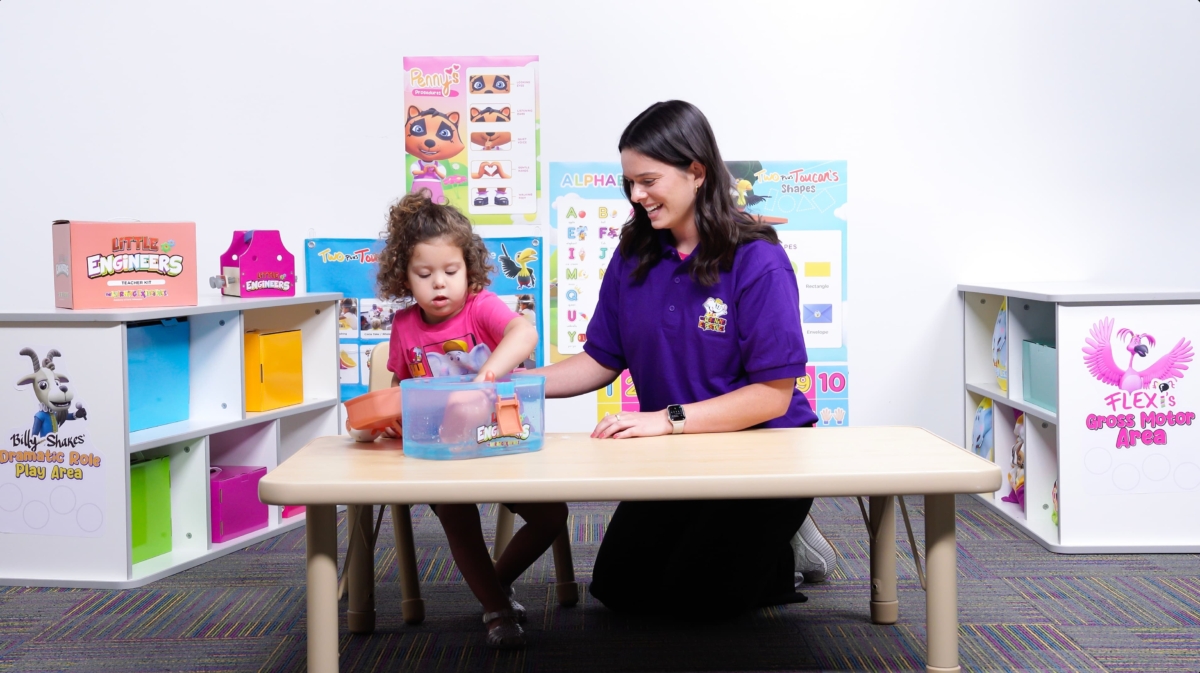
STEM started as a buzzword in education but has evolved into a critical learning approach to preparing children for the future. At The Learning Experience, each of our classrooms is designed with specific learning areas and hands-on materials to invite our little learners to explore, experiment, ask questions, and really maximize daily STEM-based learning opportunities. These hands-on learning experiences help children grow into confident problem solvers and enthusiastic learners. When STEM learning feels joyful and hands-on, children develop a strong foundation for future academic success and real-life thinking skills.
Young children are natural explorers! They want to know how things work, why things move, and what happens when they try something new. At The Learning Experience, we foster that curiosity as much as we can – our students are exposed to STEM-based activities in every classroom because it supports brain development, language growth, emotional awareness, and physical development. You can do this at home too! Parents and caregivers can support STEM learning simply by talking through everyday moments, asking questions, and encouraging hands-on exploration using materials already around the house. You don't need any special tools; you just need a little curiosity.
Narration-Based STEM Activities
One of the easiest ways to support STEM learning is through narration. Narration simply means talking out loud about what your child is doing and what is happening. This strategy helps children connect actions to words, and strengthens early reasoning and language development.
Here Are Some STEM Activities You Can Try at Home
Infants and Toddlers
- Rolling and Moving Objects
- Narrate as your child pushes a ball or car: “You pushed the car, and it rolled across the floor. It moved fast!”
- This supports cause-and-effect understanding and introduces action-based vocabulary.
- Exploring How Things Move
- As children turn wheels, stack blocks, or open and close containers, describe what you see: “The wheel spins when you touch it. The blocks fell when the tower got too tall.”
- This builds early engineering awareness and fine motor coordination.
Preschoolers
- Building and Designing
- While children build blocks or household items, narrate their process: “You added a wide base so your structure stays balanced and wouldn’t fall.”
- This supports problem-solving skills and introduces STEM language such as balance and structure.
Conversation-Based STEM Activities
STEM grows through conversation. Conversations invite children to think, predict, and explain their ideas. These interactions help children develop critical thinking skills and expressive language skills.
Try This at Home:
Infants and Toddlers
- Pause and Respond
- Ask simple questions and allow time for children to respond physically or verbally: “Did the ball roll far or close?”
- This builds early communication and observational skills.
Preschoolers
- Predict and Explain
- Ask open-ended questions during play or routines: “What do you think will happen if we make the ramp steeper?”, “Why do you think the ice melted?”
- These questions promote hypothesis-building and logical reasoning.
Observation-Based STEM Activities
Observation is a foundational scientific skill. It encourages children to notice details, patterns, and changes in their environment which deepens their understanding of the world around them.
Try This at Home:
Infants and Toddlers
- Nature Walks
- Take a short walk outdoors and point out natural elements such as leaves, rocks, or animals. Talk about what children see, hear, or feel: “This leaf feels bumpy.”, “This one feels smooth.”
- This supports sensory exploration and descriptive language.
Preschoolers
- Weather Watchers
- Observe daily weather changes and talk about what you notice together.
- If children have further interest, then pair observations with nonfiction books to deepen understanding and tap into inquiry skills.
Hands-On STEM Activities
Hands-on STEM activities allow children to test ideas, solve problems, and explore concepts through active engagement.
Try This at Home:
Infants and Toddlers
- Mixing Colors
- Use washable paint or colored water and ask children to predict what might happen when colors mix.
- Observe the results together and describe the changes.
- This supports early prediction skills and scientific observation.
- Stacking and Sorting
- Use cups, blocks, or household containers to stack, nest, or sort by size.
- These activities strengthen spatial awareness and problem-solving skills.
Preschoolers
- Pattern Building with Natural Materials
- Collect leaves, rocks, sticks, or pinecones. Create a simple pattern (rock, leaf, rock, leaf) and invite your child to continue it.
- Patterning supports early math skills, memory and sequencing.
- Hide and Guess: Hide a familiar object under a blanket or inside a bag. Children feel the object without looking and describe what they notice (soft, hard, round). They then guess what the item is.
- This builds sensory awareness, descriptive language and memory skills.
- Ramps, Speed, and Gravity Exploration: Use toy cars, balls, or household items with ramps, cardboard, or slides. Change the height or angle and observe how objects move. Children can explore speed, force, gravity, and cause-and-effect in a playful way.
STEM learning is about more than just hands-on activities; it’s also about being intentional during everyday moments. When adults thoughtfully narrate what children are doing, engage them in meaningful conversations, and encourage careful observation, they help children make sense of the world around them. At The Learning Experience, we believe this growth is strongest when schools and families work together as partners. By supporting STEM learning both in the classroom and at home, families help build children’s confidence, deepen their understanding, and strengthen critical thinking skills. These well-rounded experiences create a strong foundation for lifelong learning and foster a meaningful connection to Lionstein, our STEM character, who represents curiosity, problem-solving, and a love of discovery.
If you would like to learn more about STEM at The Learning Experience, visit your local center or talk with one of our classroom teachers. We love partnering with families to help curiosity thrive. Curious kids are HAPPY kids!