Ages 3-5 | Physical Development & Mindfulness | Featured Character: Flexi Flamingo
For young children, movement is not a break from learning. It is one of the primary ways learning happens. The relationship between physical activity and cognitive development in the early years is well-established, and understanding, it changes how parents and educators think about what a high-quality early childhood environment should actually look like.
The Brain-Body Connection in Early Childhood
When young children move, they are not just burning energy. They are building neural architecture. Physical activity increases blood flow to the prefrontal cortex, the region responsible for attention, decision-making, and impulse control. It stimulates the production of brain-derived neurotrophic factor, which supports the growth of new neural connections across the entire brain.
Gross motor development and cognitive development also share overlapping neural systems in young children. Balance and coordination activities activate the cerebellum, which plays a significant role in processing language and mathematical reasoning. This is one reason children who engage in regular, varied physical activity consistently show stronger outcomes in literacy and math skills alongside their physical development.
A classroom that prioritizes sitting still is not creating ideal conditions for learning. A classroom that integrates movement throughout the day is.
Movement and Emotional Regulation
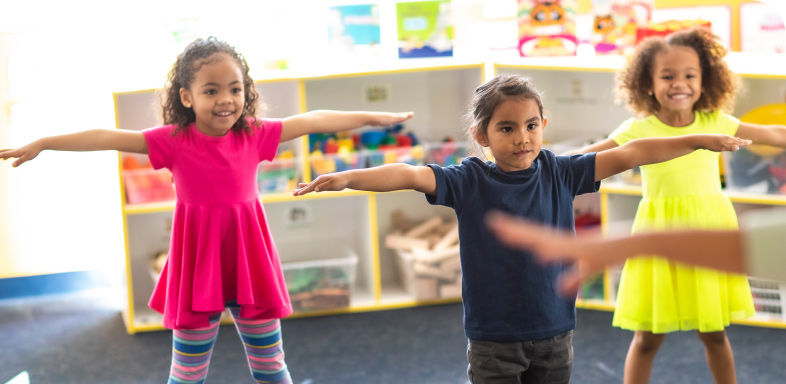
Physical activity also plays a critical role in emotional regulation, one of the most important developmental tasks of the preschool years. When a young child is overwhelmed or dysregulated, their nervous system needs support returning to a calm, focused state. Rhythmic movement like stretching, walking, or dancing activates the parasympathetic nervous system and helps facilitate that return.
Simple mindful movement practices, like slow breathing paired with gentle stretches, or body-awareness activities that help children notice where they feel tense, are developmentally appropriate tools that build both emotional vocabulary and self-regulation skills. These are not just calming exercises. They teach children to notice their own internal states, which is the foundation of emotional awareness.
At home, parents can support this development through family walks, freeze dance, animal walks, simple obstacle courses, and outdoor active play. The goal is not athletic performance- it is coordination, confidence, and the healthy habit of connecting movement with well-being.
What Active Learning Looks Like in Practice
High-quality early learning environments integrate movement intentionally as a core instructional strategy and are a natural part of the day. This might look like counting while jumping, acting out letters with full-body movements, learning left and right through physical games, or processing new vocabulary through gesture and mime.
Outdoor time is equally important and not interchangeable with indoor movement. Unstructured outdoor play on varied terrain builds core strength, spatial reasoning, risk assessment, and bilateral coordination that indoor environments simply cannot replicate. The American Academy of Pediatrics recommends at least 60 minutes of active outdoor play per day for preschool-age children.
How This Comes to Life at The Learning Experience:
At The Learning Experience, physical development is a core pillar of the L.E.A.P.® curriculum, not an afterthought. Flexi Flamingo helps bring movement, balance, and body awareness into daily classroom experiences, from structured movement activities to mindful transitions and outdoor exploration. Flexi also leads TLE's Little Goal Getters enrichment program, a seasonal enrichment program dedicated to gross motor skill development, coordination, and physical confidence. Early years guidance highlights that gross motor development in the early years is foundational, supporting children's strength, spatial awareness, and the physical control that underpins writing, classroom participation, and learning readiness. TLE teachers are trained to understand that a body in motion is a mind in motion, and that helping children develop physical confidence directly supports their readiness to learn.
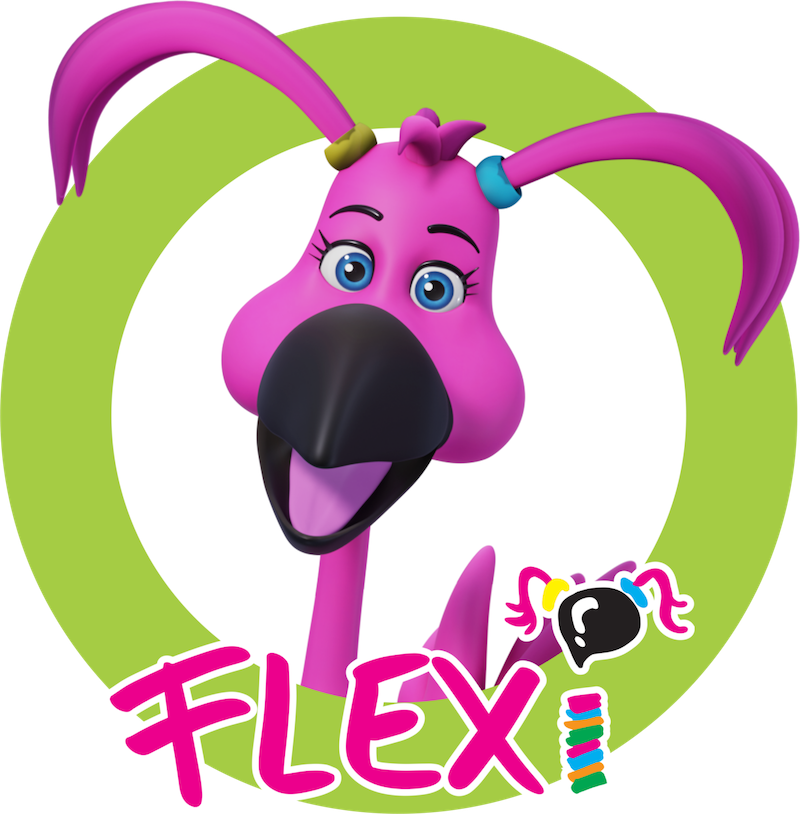
Meet Flexi Flamingo
"Staying fit and eating right will keep you healthy day and night!": Flexi Flamingo brings movement, balance, and body awareness into every corner of the TLE curriculum. Graceful, playful, and endlessly energetic, Flexi reminds children that taking care of your body is one of the best things you can do for your growing brain.
Frequently Asked Questions
Why is movement important in preschool?
Movement helps preschoolers develop coordination, balance, core strength, focus, and emotional regulation. It also directly supports brain development by stimulating the neural systems involved in attention, language processing, and mathematical reasoning.
How does physical activity help with school readiness?
Children need physical strength, coordination, and body control to sit properly, hold a pencil, participate in group activities, and manage the physical demands of a school day. Active play builds these capacities in a way that supports both classroom readiness and long-term health habits.
Want to see our curriculum in action? Schedule a tour at your nearest The Learning Experience center and watch learning come to life through the characters, activities, and meaningful moments that make TLE different.