At The Learning Experience, we believe that well-adjusted children and joyous environments create happy learning outcomes. That idea is more than a motto. It is grounded in decades of developmental research showing that a child's emotional state directly influences their ability to learn, retain information, take risks, and build the confidence they need to grow.
When children feel safe, connected, and genuinely excited about what they are doing, their brains are more open, more engaged, and more capable of making the connections that become lasting knowledge.
Why Emotional Safety Is the Foundation of Learning
Before a child can focus, explore, or take on a new challenge, they need to feel emotionally secure. This is not just intuition. It is neuroscience. The brain's threat-response system, when activated by stress, anxiety, or disconnection, actively interferes with the prefrontal cortex functions that support attention, memory, and problem-solving.
A joyful classroom creates the optimum conditions for learning. When children feel welcomed, seen, and safe, their brains can do what they are designed to do in early childhood: explore, ask questions, try things that provide challenges, and discover that perseverance is worth it.
Conversely, children who feel anxious, disconnected, or emotionally unsettled in their early education environment show measurably lower engagement, reduced language production, and less willingness to attempt new skills. Emotional environment is not a soft consideration alongside academics. It is the foundation for learning and development and lifelong learning outcomes.
What Joy Looks Like Inside the Classroom
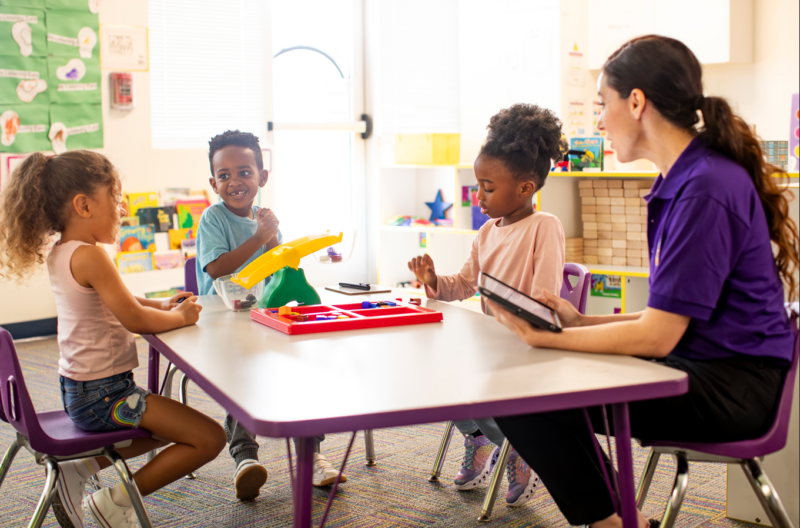
Ensuring children’s well-being requires intention planning, it does not happen accidentally. In high-quality early childhood programs, joy is built into the design of the classroom environment and the design of the day. It is evident in music that invites children to move and sing, exploring rhythm and new vocabulary, in stories that make them laugh and wonder at the same time, building strong foundations for early literacy development, and in hands-on activities that enable children to make choices, take creative risks, and discover things at their own pace.
It is also a key indicator in forming effective relationships. The single most consistent predictor of positive early learning outcomes is the quality of the relationship between a child and their teacher. Warm, responsive adult interactions create emotional safety that makes everything else possible.
Families can reinforce joyful learning at home by celebrating the process of learning How can you do this?:
- Engaging in play and asking questions:
- such as, “what could we do make your tower stronger?”
- “You are trying hard, well done!”
This creates a safe space to discover new ways to come to new understandings and evolve learning, turning everyday routines into playful discovery moments. The goal is to build a positive emotional association with learning itself, one that children carry forward for life.
How Curiosity and Confidence Are Born from Joy
Children who feel joyful in learning environments are more willing to try things they do not already know how to do. They ask more questions, showing an inquisitive mindset. They persist longer when something is difficult. They develop what researchers call a "growth mindset," the belief that ability develops through effort rather than being fixed at birth.
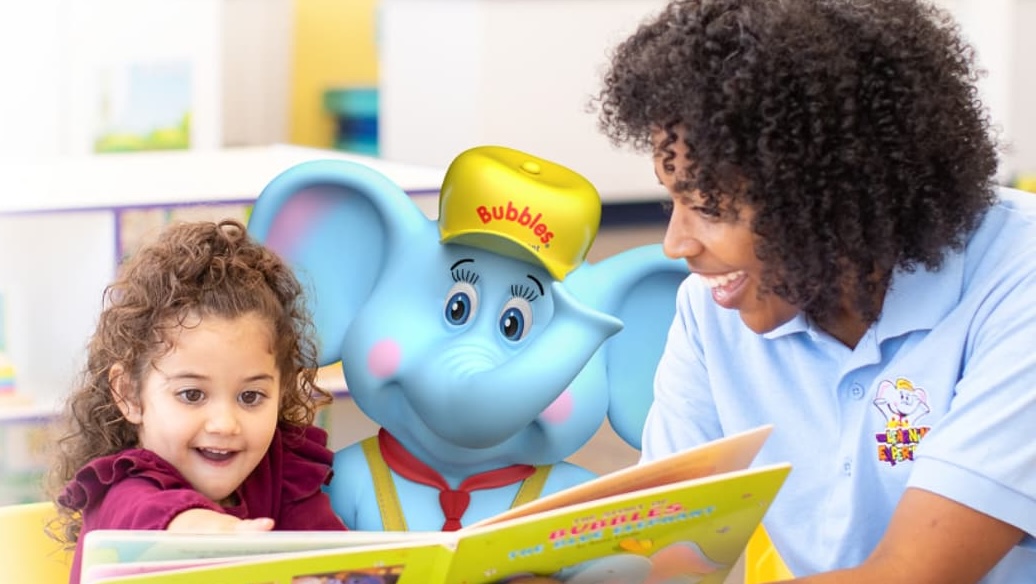
How This Comes to Life at The Learning Experience: At The Learning Experience, the curriculum offers opportunities for joyful learning. It is woven through every part of the L.E.A.P.® learning framework, from language and cognitive development to social-emotional growth and physical wellness. Research published in the Journal of Children and Media (Brunick et al., 2016) demonstrates that children form emotionally meaningful parasocial relationships with beloved characters, treating them as trusted friends, and that this bond makes characters significantly more effective as educational tools. TLE's cast of over 90 characters, each representing a specific curriculum purpose, is designed with this science in mind: when a child trusts and connects with a character, learning becomes more joyful, more memorable, and more meaningful. Bubbles is the main mascot, often the first connection children make at The Learning Experience.
Meet Bubbles — "It's a beautiful day to come and play and learn a thing or two.": Bubbles is TLE's heart of joyful learning. Warm, enthusiastic, and endlessly encouraging, Bubbles helps children feel that school is a place where they belong, where their curiosity matters, and where every day holds something worth being excited about.
Frequently Asked Questions
Why is joyful learning important in preschool?
Joyful learning environments help young children feel emotionally safe, which directly supports their ability to focus, explore, and take on new challenges. When children enjoy their learning environment, they build confidence, curiosity, and a positive relationship with school that lasts. All behaviors that support approaches for learning, key indicators for Kindergarten readiness.
How does a joyful classroom help with school readiness?
Joyful classrooms reduce anxiety, increase engagement, and strengthen the teacher-child relationships that research consistently identifies as the most important factor in early learning outcomes. Children who feel happy at school arrive in kindergarten more confident, more curious, and more prepared to learn.
Want to see our curriculum in action?
Schedule a tour at your nearest The Learning Experience center and watch learning come to life through the characters, activities, and meaningful moments that make TLE different.